
National Institute of Standards and Technology (NIST), USA
Dr. Huaiyu Heather Chen-Mayer is a Physicist in the Chemical
Process and Nuclear Measurements Group of the Chemical
Sciences Division at the National Institute of Standards and
Technology (NIST), USA. Her current research activities
include neutron-based analytical techniques, particularly
Prompt Gamma Activation Analysis (PGAA), neutron and gamma
imaging, and quantitative methods for elemental
characterization. She is responsible for the Cold Neutron
PGAA instrument at the NIST Center for Neutron Research
(NCNR).
She has contributed extensively to the development and
application of neutron-based measurement techniques for
materials science, cultural heritage studies, nuclear
technology, and industrial applications. Her work includes
advancing PGAA methodologies and supporting interdisciplinary
collaborations using reactor- and beam-based analytical
facilities. Her past interest includes Neutron Depth Profiling
(NDP) for near surface analysis, and on capillary neutron
focusing optics for PGAA and NDP.
Previously at Radiation Physics Division at NIST, Dr.
Chen-Mayer worked on CT dose standardization and water
calorimetry-based absorbed dose standards for
accelerator-based electron and x-ray radiotherapy and
developed a novel method using ultrasound thermometry,
enabling tomographic dose mapping in water.
She has participated in numerous international collaborations
and continues to support the advancement of nuclear analytical
techniques through research innovation, standards development,
and scientific cooperation.
Neutron-based analytical techniques (PGAA); neutron imaging; Compton imaging: Ghost imaging: quantitative elemental analysis; measurement standardization.
Lanzhou University, China
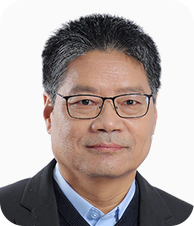
A professor of radiochemistry in Lanzhou University and Institute of Earth Environment, CAS, China, and a professor in Technical University of Denmark in 2013-2023. He was awarded Hevesy Medal Award in 2019 for his outstanding contribution in the radioanalysis and environmental tracing. He has leaded >25 projects funded by EU and China, author/coauthored >400 papers with h-index of 49 and a monograph on Chemistry and Analysis of Radionuclides. He is an associated editor of Journal of Environmental Radioactivity, and services as member of Division of Nuclear and Radiochemistry of European Chemistry Society and a mission expert of IAEA, supervised >30 PhD and 25 master students.
Radioanalytical chemistry, Radioecology, Characrerization of nuclear waste, Tracing studies using radionuclides.

The University of Tokyo, Japan
Yoshio Takahashi is a Full Professor of Geochemistry and Environmental Radiochemistry in the Department of Earth and Planetary Science at the University of Tokyo. He received his Ph.D. from the Department of Chemistry at the same university. His research focuses on the speciation of various elements, including radionuclides, in the environment using X-ray spectroscopic techniques. He published more than 400 papers and their citations are more than 15,000 (Scopus). He has received the Commendation by the Minister of Education, Culture, Sports, Science and Technology of the Japanese Government. He has also contributed to establishing the field of Molecular Geochemistry with many colleagues in the world.
Speciation, XAFS, Radionuclides, Molecular Geochemistry, Fukushima Nuclear Accident

Bhabha Atomic Research Centre (BARC), India
Dr. Raghunath Acharya is an Outstanding Scientist at Bhabha Atomic Research Centre, Department of Atomic Energy (DAE), Government of India and also a Senior Professor in Chemical Sciences at Homi Bhabha National Institute, DAE. Currently he is the Head, Isotope and Radiation Application Division (IRAD), Radiochemistry and Isotope Group, BARC, Mumbai. He is a renowned expert in Nuclear Analytical Chemistry. He is instrumental in developing nuclear analytical facilities utilizing Dhruva and Apsara research reactors and tandem particle accelerators like FOTIA as well as nuclear analytical methods for faster and non-destructive chemical characterization of materials relevant for nuclear technology, materials sciences (glass, ceramics, alloys & high purity materials) as well as for geology, biology, environment, archaeology and forensic sciences. For the first time in India, he has developed k0-based NAA & PGNAA, Internal Monostandard NAA (IM-NAA), and in-situ current normalized IBA (PIGE & PIXE) methods. A first of its kind external PIGE facility was developed by him and utilized for rapid analysis of as received samples for quantification of low Z elements and isotopic composition of B (10B/11B atom ratio) including B-10 isotope content certification in industrial B4C samples. He has also contributed towards QA/QC of NATs and utilization of NATs (NAA & PIGE) for in-house reference material (IRM) preparation. He has utilized extensively NATs for collaborative R&D work with academic institutes and also for PhD programs of research scholars.
R&D Work on Nuclear Analytical Techniques (NAATs); The k0-based NAA, PGNAA and IM-NAA; In situ current normalized vacuum chamber and external PIGE; CQC of Nuclear Technology and Advanced Materials; Total Elemental Conc. & Isotopic Composition of B (10B/11B ratio); QA/QC of NATs and Preparation of In-house RMs
Tokyo Metropolitan University (TMU), Japan
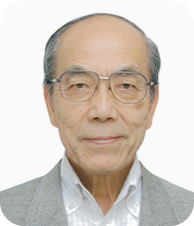
Professor Mituru Ebihara received his Ph.D. in Science from the University of Tokyo in 1979, following his undergraduate studies there. He began his academic career at the University of Chicago (1979–1982), and subsequently held positions at Gunma University (1982–1988), Tokyo Metropolitan University (1988–2018), and Waseda University (2018–2024). He is currently Professor Emeritus and Visiting Professor at Tokyo Metropolitan University. Professor Ebihara’s research focuses on cosmochemistry, particularly the elemental composition of meteorites and its implications for early solar system processes. He has made significant contributions to analytical techniques and geochemical interpretations using neutron-based methods. He has served as a member of the International Commission on Atomic Weights and the International Committee on Activation Analysis. He is a Fellow of the Meteoritical Society and a recipient of major awards from the Geochemical Society of Japan and the Japan Society of Nuclear and Radiochemical Sciences.
Neutron Activation Analysis; Prompt Gamma-ray Analysis; Meteorites; Returned Samples from Asteroids; Solar System Abundances of the Elements

Yonsei University, Republic of Korea
First-principles Computational Radiochemistry, AI-Neural Network modeling for Energy Materials, Water Electrochemistry(Hydrogen & Oxygen Fuels), Catalysis, Fuel Cells, Battery Materials
Organized by


