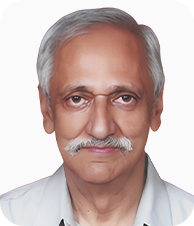
Panjab University, India
Prof. Dr. Alok Srivastava, is a distinguished chemist and
academician with over 40 years of experience in research,
teaching, and international scientific collaboration. He has
been recognized globally for his scientific contributions,
holding prestigious fellowships from Department of Atomic
Energy (Government of India), Indian Chemical Society,
Alexander von Humboldt Foundation, Germany and European
Community.
His research spans Nuclear Chemistry, Material Science,
Radiation Biology, Environmental and Geoscience, Public Health
and Nuclear Safeguards. He has published nearly 100 papers and
delivered over 150 invited lectures worldwide.
He has served as Professor and Chairman of Centre for Advanced
Studies in Chemistry of Panjab University Chandigarh and
continues to work as Adviser/Consultant in the Centre for
Industry Institute Partnership of the University. He is also
associated with Indian Institute of Petroleum and Energy,
Visakhapatnam as an Advisor.
He was invited to work as DAAD Professor in a German
University to establish “European Master of Science in Nuclear
Applications” an international academic program focused on
peaceful applications of Nuclear Science. As Distinguished
Professor and Scientific Advisor to Pahle India Foundation, a
leading think tank of India he has been actively involved in
combating environmental lead poisoning. He remains a prominent
voice on science popularization.
Toxic Elements, Polymeric Materials, Nuclear Reactors, Gamma Ray and Alpha Spectrometry, Activation Techniques, Mobilization in Terrestrial and Aquatic Ecosystems
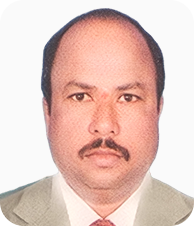
Andhra University, India
Prof. Angalakuduru Durga Prasada Rao was joined in the nuclear
physics department of Andhra University, Visakhapatnam, India
as a faculty member in the year 1994. Since March 2009; he has
been working as a professor of nuclear physics department. He
is presently serving as chairman to the PG board of studies in
the department. During July 2009- November 2016, he was served
as head of the department, during which Project work was
introduced in the 4th semester of M.Sc., course. Students were
made to visit many DAE organizations namely BARC, IGCAR, VECC,
RRCAT etc. He was served as Registrar of Vikrama Simhapuri
University (VSU), Nellore during 2018-19, met the challenges
in building this new University, thus worked hard to get
approval from government for construction of new buildings and
foundation laid for development of infrastructure. The
university won NSS award at national level and received it in
New Delhi. He has also been serving in the governing bodies,
enquiry committees and board of studies related to reputed
institutes and organizations.
His areas of
research interest include applied radiation physics such as
elemental analysis with nuclear techniques, material science
and medical physics. He has around 143 research publications
in reputed international and national journals along with
presentations in conferences. Supervised 22 PhD and 7 M.Phil.
scholars besides several M.Sc., project works. He was carried
major projects sanctioned by funding agencies by SERB, BRNS,
AERB etc, visited Japan, USA, Russia and UK for presentation
of research work in the conferences. He has received BEST
TEACHER award from the government of AP in the year 2025.
Besides that, several awards were received from different
scientific and non-governmental organizations.
Nuclear analytical techniques, Inorganic elements, life style diseases, medicinal plants, Health management, Fishes, nutritious, pollution
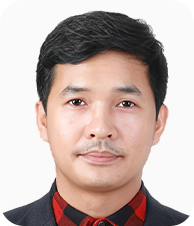
Sejong University, Republic of Korea
Dr. Nguyen Huu Tiep is an Assistant Professor in the Department of Quantum and Nuclear Engineering at Sejong University. His research interests include reactor physics, thermal-hydraulics, data assimilation, uncertainty quantification, and machine learning for nuclear engineering, with a current focus on data-efficient learning and hyperparameter optimization.
Reactor physics, thermal-hydraulics, uncertainty quantification, hyperparameter optimization, machine learning
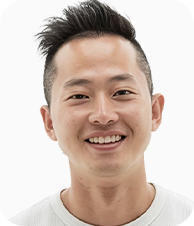
Korea Atomic Energy Research Institute, Republic of Korea
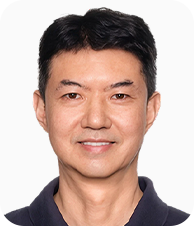
Dr. Jongwon Park is a Principal Researcher with the Extreme Robotics Team at the Korea Atomic Energy Research Institute (KAERI) and a Professor of Artificial Intelligence at the Korea National University of Science and Technology. He received his Ph.D. from the Korea Advanced Institute of Science and Technology (KAIST) in 2015. His research focuses on the design, control, and teleoperation of advanced robotic systems for extreme and hazardous environments, particularly nuclear facilities and accident-response scenarios. In 2014, he developed “Raptor,” a high-speed bipedal robot capable of running at 46 km/h. In 2017, he won the IAEA Robotics Challenge with the Spent Fuel Check Vehicle (SCV), a robotic platform designed to perform nuclear safeguards inspection tasks. Since 2018, Dr. Park has led the development of “ARMstrong,” a hydraulic dual-arm robot designed for demanding manipulation and emergency-response operations in nuclear environments. Through these projects, he has contributed to advancing high-performance mobile robots and remotely operated robotic systems that enhance human safety and operational capability in challenging conditions.
Extreme-environment robotics, nuclear emergency-response robotics, mechanical design, robotic system control, teleoperation, and hydraulic robotic systems.
Korea Atomic Energy Research Institute, Republic of Korea
Sungmoon Joo is a Principal Researcher in the Extreme Robotics
Section at the Korea Atomic Energy Research Institute (KAERI)
and an Associate Professor in the Artificial Intelligence
Program at the KAERI School of the University of Science and
Technology (UST). He received his Ph.D. in Aeronautics and
Astronautics from Stanford University. Prior to joining KAERI,
he was a Research Scientist II in the School of Interactive
Computing at the Georgia Institute of Technology and a
Principal Research Engineer at the Mechatronics Center of
Samsung Heavy Industries.
At KAERI, his recent research integrates physics-aware AI,
robot learning, and agentic AI to develop intelligent robotic
systems for extreme and nuclear environments. His major
contributions include telerobotic manipulation frameworks for
hazardous material handling, LiDAR-based perception and
monitoring systems for nuclear decommissioning, and hybrid
agentic AI frameworks for reliable, instruction-based
execution of complex manipulation tasks. He has also been
leading the Physical AI and Robotics Lab (PAIR Lab) at UST,
where his group's research interests extend to AI
co-scientists and autonomous laboratory systems.
ics-Aware AI, Robot Learning and Manipulation, Agentic AI, AI Co-Scientists and Autonomous Laboratories, Extreme & Nuclear Robotics
Korea Atomic Energy Research Institute , Republic of Korea
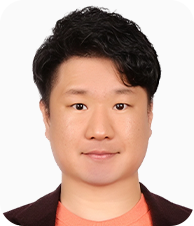
Hogeon Seo is the Head of the Applied AI Section at the Korea Atomic Energy Research Institute (KAERI) and an Associate Professor of Artificial Intelligence at the University of Science and Technology (UST). He received his B.S. (2013) and Ph.D. (2018) in Mechanical Engineering from Hanyang University. His doctoral research focused on acoustic linear and nonlinear synthetic aperture imaging. He began his career as a postdoctoral researcher in AI laboratory at Gwangju Institute of Science and Technology (GIST) and joined KAERI in 2019.
AI-Accelerated Engineering Simulation, Optimization of Agentic AI Architectures, Physics-Informed Machine Learning (PIML), Autonomous Non-Destructive Evaluation (NDE)
Seoul National University, Republic of Korea
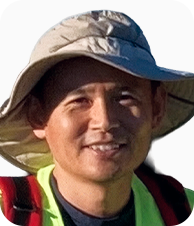
Neung-Hwan Oh is a professor in the Department of Environmental Management at the Graduate School of Environmental Studies, Seoul National University. His research focuses on watershed biogeochemistry and the impacts of land-use and climate change on the ecosystem carbon cycle. His work integrates field observations, chemical analyses, and interdisciplinary approaches to better understand carbon transport and transformation across terrestrial–aquatic interfaces. Through these efforts, his research has advanced the understanding of dissolved organic carbon dynamics, greenhouse gas emissions, soil biogeochemistry, and the influence of anthropogenic disturbances on environmental processes. He has published in leading international journals, including Nature, Global Change Biology, Journal of Hydrology, and Biogeosciences. Through interdisciplinary collaborations across environmental science, forestry, ecology, hydrology, and chemistry, Professor Oh continues to contribute to the scientific understanding of ecosystem responses to global environmental change and to the development of sustainable environmental management strategies.
Carbon Cycle, Radiocarbon, Ecosystem, Watershed, Climate Change, Land-Use Change
Jeonbuk National University, Republic of Korea
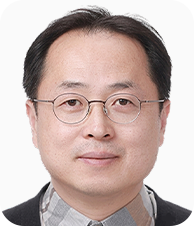
Dr. Myung-Joon Jeong is an Associate Professor of Pulp and
Paper Science in the Department of Wood Science and Technology
at Jeonbuk National University, Republic of Korea. He received
his Ph.D. in Biological and Environmental Science from Dongguk
University in 2008. Before joining Jeonbuk National
University, he conducted postdoctoral research at the National
Gallery of Art in Washington, DC, the Centre de Recherche sur
la Conservation in Paris, and the University of Natural
Resources and Life Sciences Vienna (BOKU).
His research focuses on cellulose degradation and
permanence, paper conservation, pulp and paper science, and
lignocellulosic biomass conversion. He investigates changes in
cellulose degree of polymerization and oxidation under
accelerated aging, conservation treatment, and ionizing
radiation to improve paper permanence evaluation and lifetime
prediction. His recent work covers radiation-induced changes
in crystalline and amorphous cellulose, predictive modeling
under temperature and moisture effects, and minimally invasive
assessment using water-soluble carbohydrates. His research
contributes to preserving paper-based cultural heritage and
developing sustainable cellulose-based materials.
Cellulose Degradation; Paper Conservation & Predictive Lifetime Modeling; Papermaking Wet-End Chemistry
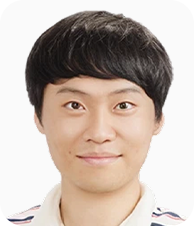
Korea Atomic Energy Research Institute, Republic of Korea
Dr. Jaegi Lee is a Senior Researcher in the HANARO Utilization Research Division at the Korea Atomic Energy Research Institute (KAERI). He earned his Ph.D. in Biomedical Radiation Sciences from Seoul National University in 2018. His technical expertise encompasses radiation dosimetry, Monte Carlo simulation, and microstructural analysis using Positron Annihilation Spectroscopy (PAS).
Positron Annihilation Spectroscopy (PAS), Radiation Dosimetry, Monte Carlo Simulation
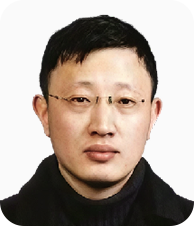
Korea Hydro Nuclear Power Co., Central Research Institute
Dr. Seung-Chan LEE is a Senior Researcher in Korea Hydro Nuclear Power Co. Central Research Institute (KHNP-CRI). He majored in Nuclear atomic physics and received his Ph.D. in physics from KYUNGPOOK NATIONAL UNIVERSITY (KNU) in 2002. His technical and academic research focuses on atomic physics. Currently employed at KHNP-CRI, he primarily researches nuclear power plant impact assessment, accident analysis linked to NPP safety, and safety issue solution development. In particular, he independently develops the computer programs for dose assessment, the atmospheric dispersion factor codes and Integrated Assessment Program.
Dose Assessment, Computer Program Development, Accident Impact Assessment, MCR Safety Analysis, Safety System Evaluation, Monte-Carlo Simulation
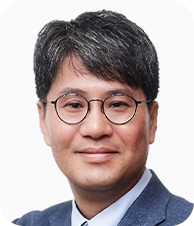
KAIST, Republic of Korea
Jong-Il Yun is a Professor in the Department of Nuclear and
Quantum Engineering at the Korea Advanced Institute of Science
and Technology (KAIST), Republic of Korea. He currently serves
as the Chair of the Board of Directors of the Innovative Small
Modular Reactor (iSMR) Development Agency and previously held
leadership positions as Head of the Department and Director of
the BK21 Center for Future Nuclear at KAIST.
He received his B.Sc. in Nuclear Engineering from Seoul
National University, Dipl.-Ing. in Mechanical Engineering and
Dr.-Ing. in Radiochemistry from RWTH Aachen University,
Germany, and was a researcher at the Karlsruhe Institute of
Technology (KIT) before joining KAIST in 2007.
His research interests include nuclear fuel cycle,
radiochemistry, molten salt chemistry, radioactive waste
management, pyroprocessing, and nuclear forensics. He has
authored more than 360 scientific publications and has
contributed extensively to Korea's nuclear policy through
service on national advisory committees.
Nuclear fuel cycle, radiochemistry, molten salt chemistry, radioactive waste management, pyroprocessing, nuclear forensics
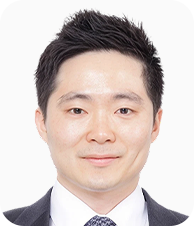
Seoul National University, Republic of Korea
Sungyeol Choi is a Professor in the Department of Nuclear Engineering at Seoul National University (SNU), where he also serves as the Founding Head of the Integrated Major in Sustainable High-level Radioactive Waste Management. Prior to joining SNU, he served as an Associate Professor at KAIST, an Assistant Professor at UNIST, a Senior Researcher at the Korea Atomic Energy Research Institute (KAERI), and a Research Fellow at Harvard University. He currently serves as Vice-Chair of the OECD/NEA Global Forum on Nuclear Education, Science, Technology and Policy. He received his Ph.D. in Nuclear Engineering in 2012 and his B.S. in Nuclear Engineering in 2008, both from Seoul National University. His research focuses on used nuclear fuel management, with particular emphasis on molten salt chemistry and radioactive waste disposal.
Used Nuclear Fuel Management, Radioactive Waste Disposal, Molten Salt Chemistry
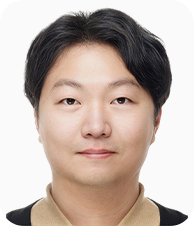
Hanyang University, Republic of Korea
Sangtae Kim is an Associate Professor in the Departments of
Nuclear Engineering and Materials Science and Engineering at
Hanyang University in Seoul, Korea. He received his Ph.D. in
Materials Science and Engineering from the Massachusetts
Institute of Technology in 2016 under Prof. Ju Li, following a
B.S. from the University of California, Berkeley, and was a
senior research scientist at the Korea Institute of Science
and Technology before joining Hanyang University in 2020.
His group works on structural materials for molten salt
reactors, where corrosion remains a principal barrier to
deployment. Combining electrochemical experiments with
first-principles calculations, molecular dynamics, and
machine-learned interatomic potentials, the group has screened
corrosion-resistant coatings using computational
phase-stability diagrams, engineered grain boundaries in
nickel-based alloys against intergranular chloride attack, and
characterized the structure and properties of uranium-bearing
chloride melts.
He leads national research programs on molten salt reactor
materials, co-organizes the TMS symposium on Materials and
Chemistry for Molten Salt Systems, and serves on the TMS
Corrosion and Environmental Effects Committee and an OECD/NEA
Global Forum working group on the nuclear fuel cycle.
Molten salt corrosion, molten salt applications, corrosion
Organized by


